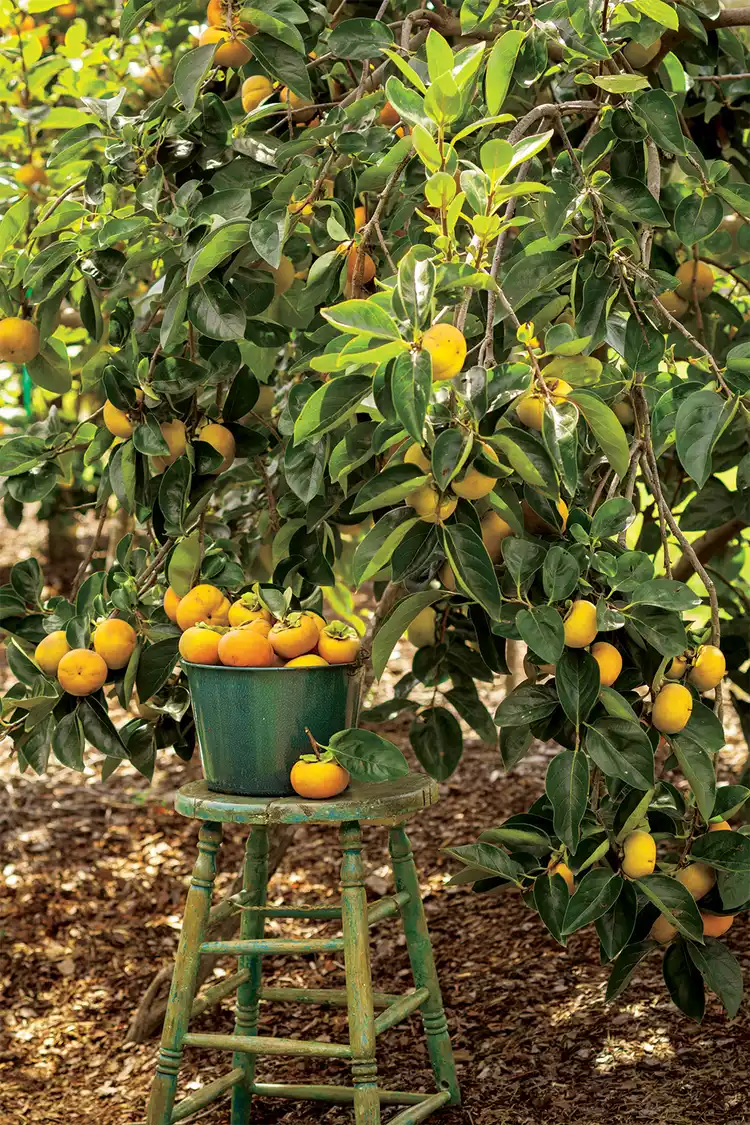
The difference between a ripe persimmon and an unripe fruit is easy to see in the kitchen. A ripe fruit will find its way into baked goods, salads, and more delicious recipes. An unripe persimmon is quickly cast aside. An unripe fruit is full of tannins which give it strong astringency that is best described as dry, chalky, and intensely sour. To put it simply, unripe persimmons are inedible. A ripe persimmon, on the other hand, has a sweet and mellow flavor. Figuring out when this fall fruit turns tasty has long puzzled gardeners and cooks alike. These tips will help you tell when a persimmon is ripe so you can enjoy the sweetest fruit.
Know What Kind of Persimmon Tree You Have
American and Oriental persimmons trees are both commonly grown for their fall fruit. American persimmons are native to southern and eastern regions of the United States. A valuable food for wildlife and host to several types of pollinators, American persimmons produce fruit the size of a plum. Significantly more cold hardy that Oriental persimmons, American persimmon trees can withstand low temperatures down to 20℉ below zero.
The fruit of Oriental persimmons is a little larger, about the size of a peach. Large fruit and productive trees make Oriental persimmons a popular choice in areas where they’re hardy.
When Are American Persimmons Ripe?
American persimmons ripen in early fall, between September and October in most parts of the country. The fruit takes on a deep orange-yellow hue and the skin becomes almost translucent when fully ripe. The fruit’s texture most reliably indicates when American persimmons are ripe. Unlike Oriental persimmons, which can be sweet when only slightly soft, American persimmons have the best flavor when they are mushy in texture. This perfect sweetness occurs just before the fruit rots. Yes, it’s a fine line but with regular monitoring, you can catch this delicious native fruit at its peak.
When Are Oriental Persimmons Ripe?
Oriental persimmons often resemble slicing tomatoes clinging to the branches of a tree. A persimmon tree with a bountiful crop makes a colorful fall landscape plant just as the growing season is winding down. Oriental persimmons often ripen slightly later than their American cousins. Count on Oriental fruit to ripen in October or November.
Color is an indicator of ripeness. The color of ripe Oriental persimmons varies by variety. Some varieties are deep orange when ripe, while other varieties are orange-yellow at optimum sweetness. If you know the variety of your tree, research its mature color. Unknown varieties call for trial and error to figure out their mature color. Texture is another reliable indicator of ripeness. Oriental persimmons are generally soft to the touch when ripe—you want a similar softness to that of a ripe tomato. The skin should give slightly but they don’t have to be so soft that they fall apart in your hand.
How to Ripen Persimmons After Harvest
Persimmons, like bananas, tomatoes, and peaches, will continue to ripen after they are picked. The key to a sweet, mellow-flavored persimmon is harvesting the fruit after it reaches mature size and color. The flesh will soften in time when the fruit is stored at room temperature. If persimmons are harvested before their size and color are fully developed, they will never fully ripen.
No Frost? No Problem
There’s a common misconception that frost is necessary to ripen a persimmon. This is actually not true. In fact, immature persimmons that are nipped by frost will rot quickly. If persimmons are not ripe and a frost is predicted, the crop will likely be lost. While frost has nothing to do with ripening, it does enhance flavor of already ripe fruit. Ripe persimmons begin to dry after a frost and become sweeter as the sugar in them concentrates.
Which Persimmon Varieties to Grow
Named varieties of persimmon trees produce the best fruit. Trees growing in the wild are usually seedling trees and their production varies. If you have space for a large tree, a 30- to 50-foot-tall and wide American or native persimmon tree will not only produce a crop of fruit for you, but an established tree will provide food and shelter for birds, insects, and other wildlife. For example, persimmon leaves are the favorite food of many native moth caterpillars, like Luna moth and regal moth.
‘John Rick,’ ‘Even Golden,’ ‘Prok,’ and ‘Yates‘ are excellent varieties of native American persimmons. The large trees are hardy in Zones 5-9 and will begin producing fruit about 4 years after planting. ‘Fuyu,’ ‘Tanenashi,’ ‘Ichikikei Jiro,’ and ‘Hachiya’ are outstanding Oriental persimmon cultivars that will grow in Zones 6 or 7 and above. Expect Oriental cultivars to grow 10 to 20 feet tall and wide. For best fruit production, plant two or more persimmons in the same area.
New